Buying the right equipment doesn’t always solve the problem. If your meeting room still has poor audio, unreliable video calls, or technology that’s difficult to use, the issue is often the system, not the devices.
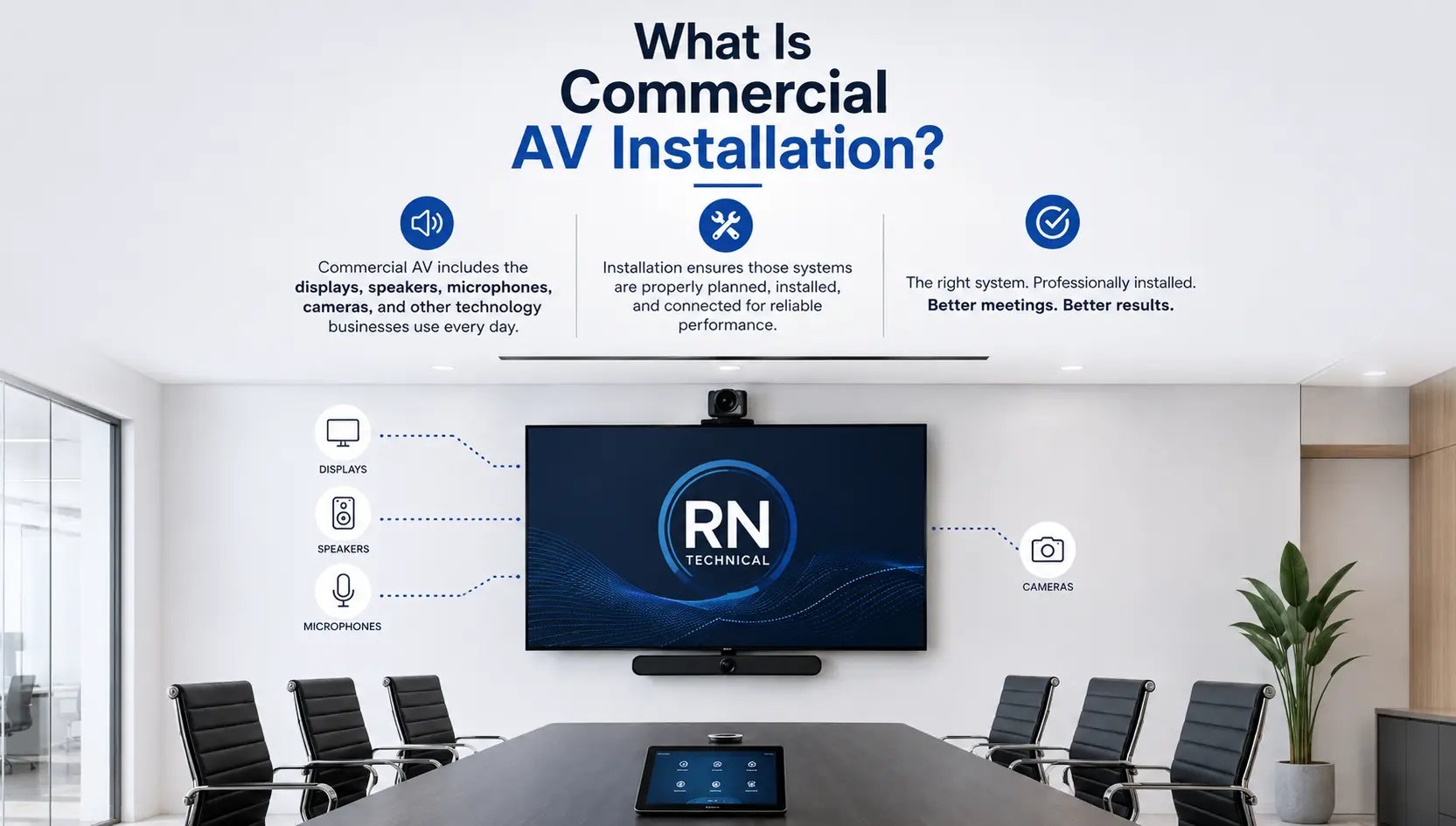
Commercial AV (audiovisual) includes the displays, speakers, microphones, cameras, and other technology businesses use every day. Installation ensures those systems are properly planned, installed, and connected for reliable performance.
The sections ahead explain commercial audio video installation, how it works, why proper integration matters, and how to choose the right solution for your business.
Also Read:
Which Is the Most Heavily Surveilled Country in the World?
What Commercial AV Installation Actually Means
Commercial AV (audiovisual) installation is the planning and setup of business technology, including meeting room displays, video conferencing systems, speakers, digital signage, and control systems that work together as a single solution.
Businesses invest in these systems to hold more productive meetings, deliver consistent customer experiences, share information across their facilities, and reduce the technology issues that interrupt day-to-day operations.
From conference rooms and retail stores to restaurants, classrooms, healthcare facilities, and hotels, a well-planned commercial AV system helps people communicate more effectively while reducing the technical issues that can disrupt everyday business.
What’s Included in a Commercial AV Installation?
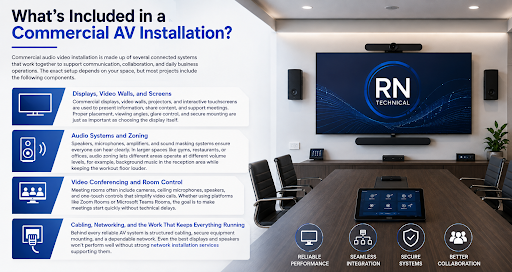
Commercial audio video installation is made up of several connected systems that work together to support communication, collaboration, and daily business operations. The exact setup depends on your space, but most projects include the following components.
Displays, Video Walls, and Screens
Commercial displays, video walls, projectors, and interactive touchscreens are used to present information, share content, and support meetings. Proper placement, viewing angles, glare control, and secure mounting are just as important as choosing the display itself.
Audio Systems and Zoning
Speakers, microphones, amplifiers, and sound masking systems ensure everyone can hear clearly. In larger spaces like gyms, restaurants, or offices, audio zoning lets different areas operate at different volume levels, for example, background music in the reception area while keeping the workout floor louder.
Video Conferencing and Room Control
Meeting rooms often include cameras, ceiling microphones, speakers, and one-touch controls that simplify video calls. Whether using platforms like Zoom Rooms or Microsoft Teams Rooms, the goal is to make meetings start quickly without technical delays.
Cabling, Networking, and the Work That Keeps Everything Running
Behind every reliable AV system is structured cabling, secure equipment mounting, and a dependable network. Even the best displays and speakers won’t perform well without strong network installation services supporting them.
You May Also Like:
Pros and Cons of Video Surveillance
Where Is Commercial AV Installation Used?
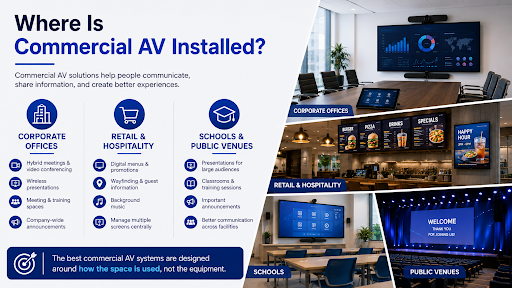
Commercial AV installation is used in many industries, but the purpose is always the same: to help people communicate, share information, and create a better experience in the space.
Corporate Offices
From small meeting rooms to large boardrooms, businesses use commercial AV systems for:
- Hybrid meetings and video conferencing
- Wireless presentations
- Training rooms
- Huddle spaces
- Company-wide announcements
The goal is to make meetings easier to start and more productive.
Retail & Hospitality
Retail stores, restaurants, hotels, and cafés use AV technology to:
- Display digital menus and promotions
- Share wayfinding or guest information
- Play background music
- Manage multiple screens from one location
These systems help create a consistent customer experience while making content easier to update.
Schools & Public Venues
Schools, conference centers, churches, healthcare facilities, and entertainment venues rely on commercial AV to:
- Deliver presentations to large audiences
- Support classrooms and training sessions
- Share important announcements
- Improve communication across the facility
Although every business has different requirements, the best commercial AV systems are designed around how the space is used, not simply the equipment installed.
Also Read:
What Are the Trends in Video Surveillance Technology in 2026?
How Commercial AV Connects to Security and Network Infrastructure
Commercial AV integration means the system doesn’t work in isolation. Every display, video conferencing system, digital sign, and control panel relies on the same technology that keeps the rest of your business connected.
Think of your business network as the backbone of the entire system. If the network is slow or unreliable, video calls may freeze, digital displays can lag, and connected devices may struggle to communicate.
That’s why a successful AV project often starts with a strong network, making network installation services an important part of the overall plan.
Many businesses also take the opportunity to upgrade their security at the same time.
Since AV systems and best security camera installation services often share the same cable pathways and network infrastructure, combining the two projects can reduce installation costs, minimize disruption, and make future expansion much easier.
Planning everything as one connected system helps avoid duplicate work, keeps installations cleaner, and ensures your technology is ready to support your business for years to come.
How the Planning and Installation Process Works
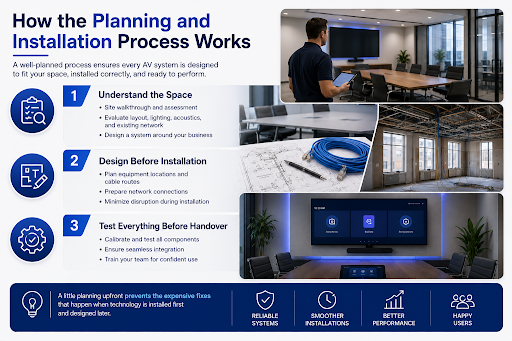
Reliable commercial AV integration doesn’t happen by accident. It comes from a well-planned process that starts long before installation and continues until every component has been tested and is ready to use.
From the first walkthrough to the final handover, here’s what you can expect.
1. Understand the Space
Every project begins with a site walkthrough.
The integrator looks at how the space will be used, where people will sit or stand, lighting conditions, acoustics, and the existing network.
The goal is to design a system around your business, not the other way around.
2. Design Before Installation
Next comes the system design.
Equipment locations, cable routes, and network connections are planned before installation begins. For a restaurant remodel, this often means running cables before drywall is installed.
In an existing office, the focus is on upgrading the space with as little disruption as possible.
3. Test Everything Before Handover
Once installed, the system is calibrated, tested, and integrated so every display, speaker, camera, and control panel works together. Before the project is complete, employees are shown how to use the system confidently from day one.
A little planning upfront prevents the expensive fixes that often happen when technology is installed first and designed later.
The Difference You’ll Notice From Day One
The biggest difference isn’t the new displays or speakers; it’s how naturally everything works.
Meetings start with a single tap instead of someone searching for the right remote or cable. Everyone in the room can see the presentation clearly, without moving chairs to avoid glare or blocked views.
Voices sound clear whether you’re sitting at the front of the room or the back. Remote participants can hear the conversation just as easily as the people around the table.
Employees don’t hesitate before using the technology because the controls are simple and familiar. Guests aren’t left waiting while someone figures out how to connect a laptop or start a video call.
That’s what a well-designed commercial AV system is meant to do. When the planning and integration are done right, the technology quietly fades into the background, allowing people to focus on the meeting, the presentation, or the customer, not on making the equipment work.
Read The Insights:
What Are Types of Electrical Installation?
Commercial AV vs. Home Theater Installation
People often assume commercial AV is just a larger home theater. In reality, they’re built for completely different environments.
Home theater services are designed around entertainment, where a few people use the system in a familiar space. A commercial AV system has a different job. It needs to support meetings, presentations, customer experiences, or day-to-day operations—and it has to work reliably for different people throughout the day.
That means the focus isn’t just on picture or sound quality. It’s on simple controls, dependable performance, and seamless integration with your business network and other technology, so employees can walk in, press a button, and get to work instead of figuring out how everything connects.
Common Mistakes Businesses Make With AV Installation
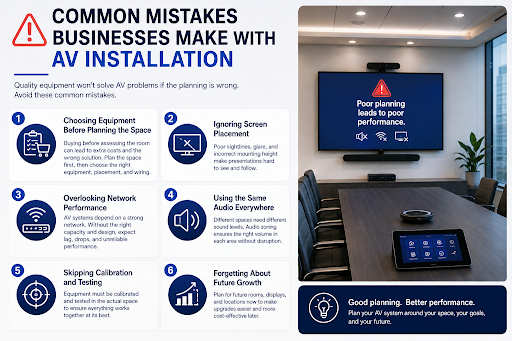
Many businesses invest in quality equipment but still run into frustrating AV issues. In most cases, the problem isn’t the technology; it’s the planning behind it.
Here are some of the most common mistakes experienced AV integrators see.
Choosing Equipment Before Planning the Space
Buying displays, speakers, or cameras before assessing the room often leads to extra costs. A site assessment helps determine the right equipment, placement, and wiring before any purchasing decisions are made.
Ignoring Screen Placement
A large display won’t deliver a better experience if people can’t see it clearly. Poor sightlines, glare from windows, and incorrect mounting height can make presentations difficult to follow.
Overlooking Network Performance
Modern AV systems rely heavily on the business network. If the network isn’t designed to handle video conferencing, streaming, or multiple connected devices, performance issues are almost inevitable.
Using the Same Audio Everywhere
Different spaces have different sound requirements. A gym, restaurant, or office often needs separate audio zones so each area can have the right volume without affecting the others.
Skipping Calibration and Testing
Installing equipment is only the beginning. Cameras, microphones, speakers, and displays need to be calibrated and tested to ensure they perform well in the actual space.
Forgetting About Future Growth
An AV system should grow with your business. Planning for additional meeting rooms, displays, or new locations from the start makes future upgrades simpler and more cost-effective.
What Sets a Professional Installation Apart
Two businesses can install almost identical equipment and end up with completely different results. That’s because the success of a commercial AV system depends as much on its design and integration as the equipment itself.
Without proper integration, even high-quality displays, speakers, and cameras can struggle to work together, leading to unreliable performance and frustrated users.
A professional AV installation stands apart because it focuses on the details that determine how the system performs long after installation day.
- Looks beyond the equipment. The focus is on how every component works together, not just what’s installed.
- Makes decisions based on the space. The same equipment won’t produce the same results in every room.
- Plans for years, not opening day. A well-designed system should continue meeting your needs as the business evolves.
- Keeps technology simple. The best AV systems don’t require an expert to operate them.
A commercial AV system is an investment of both time and money. Choosing the right integrator helps ensure that investment delivers the reliable performance, ease of use, and long-term value your business expects.
Also Read:
Wired vs Wireless Security Cameras: What Actually Works Better Long-Term?
Ready to Plan Your Commercial AV System?
Every business uses technology differently, which is why every AV system should be planned differently.
If you’re ready to improve the way your space communicates and operates, we can help you design a solution that fits your needs today and supports your business well into the future.
Request a consultation or schedule a walkthrough to get started.
Frequently asked questions
Q1. What does commercial AV mean?
Commercial AV refers to the audio, video, and control systems businesses use, like displays, speakers, microphones, and cameras, designed for spaces like offices, retail stores, and meeting rooms.
Q2. What does AV installation mean?
AV installation is the process of planning, setting up, and connecting audio and video equipment so it works reliably as a complete system, not just individual devices.
Q3. Is AV installation a good job?
Yes. It’s a hands-on trade with steady demand as more businesses invest in meeting rooms, digital signage, and video conferencing technology.
Q4. How do I get into commercial AV?
Most people start with hands-on experience or an entry-level installer role, then build skills in networking, audio, and system design over time.
Q5. What’s the difference between commercial AV installation and home theater installation?
Commercial AV is built for multiple users and everyday business use, while home theater installation is designed around one household’s occasional use.